7 min read
How to Throw a Punch: A Step-by-Step Guide for Women
Written by Christian Anders · Updated October 29, 2026
A punch is a coordinated movement, not just an arm action. Your feet, hips, torso, and hands work together. These beginner cues explain stance, guard, jab, and cross, with adjustments for your individual body. Start with slow, non-contact practice and get coaching before adding impact.
1. Set your stance
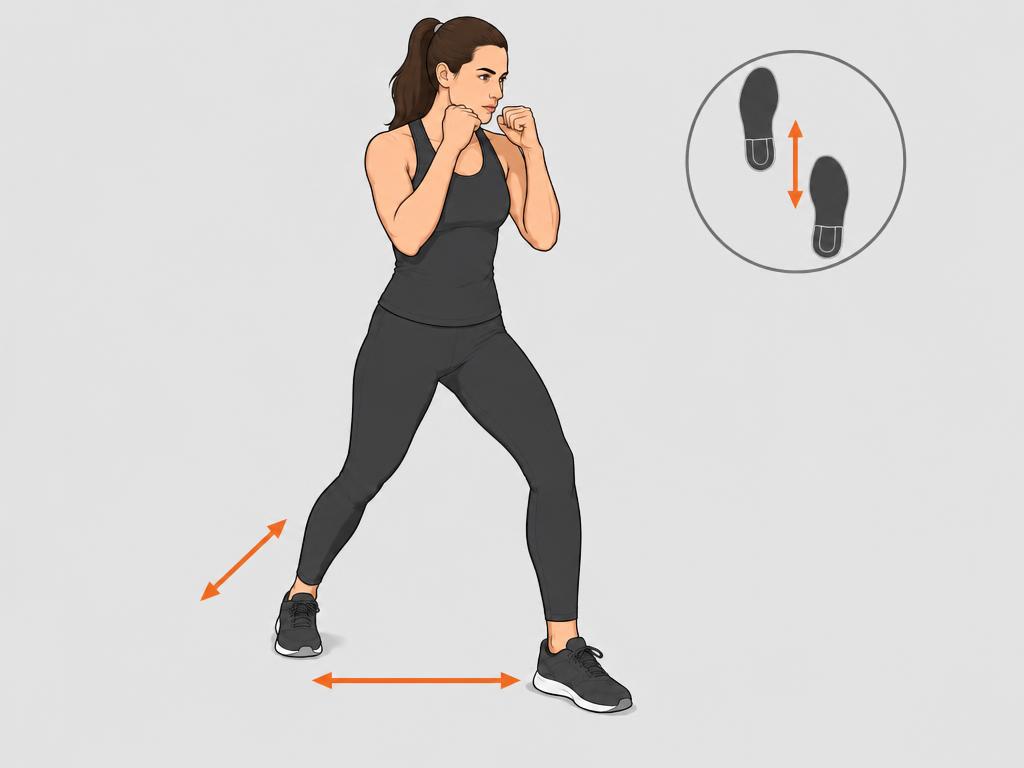
Stand with your feet about shoulder-width apart. Step your dominant foot back about half a step and turn it slightly out. Bend your knees a little — you should feel springy, not stiff.
Stance width and balance vary by person. Women do not all share the same proportions or mobility: choose a width that lets you move without wobbling, and ask a coach to check your position. [1, 2]
2. Make a proper fist
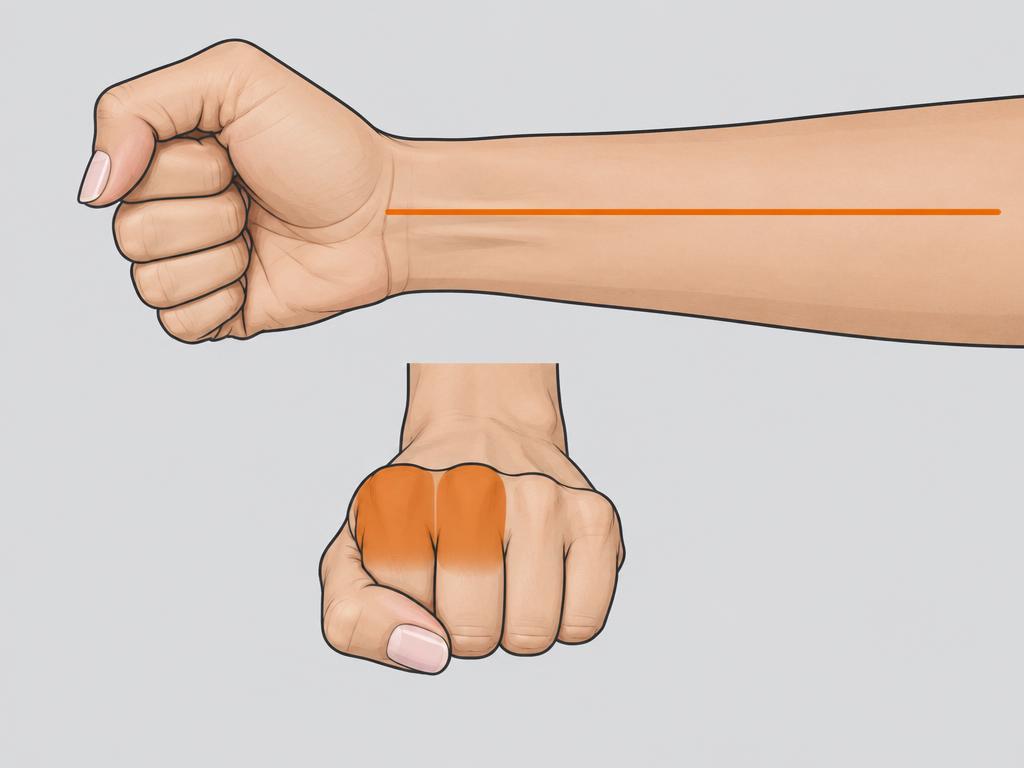
Curl your fingers tightly into your palm, then wrap your thumb across the middle of your index and middle fingers — never tucked inside. Keep your wrist straight so your knuckles and forearm form one line.
Hand size affects equipment fit, but does not establish your individual injury risk. Punching hard objects can fracture the hand. Practice without impact first, and get coaching on wraps, gloves, and striking alignment before bag work. [1, 3]
3. Guard up
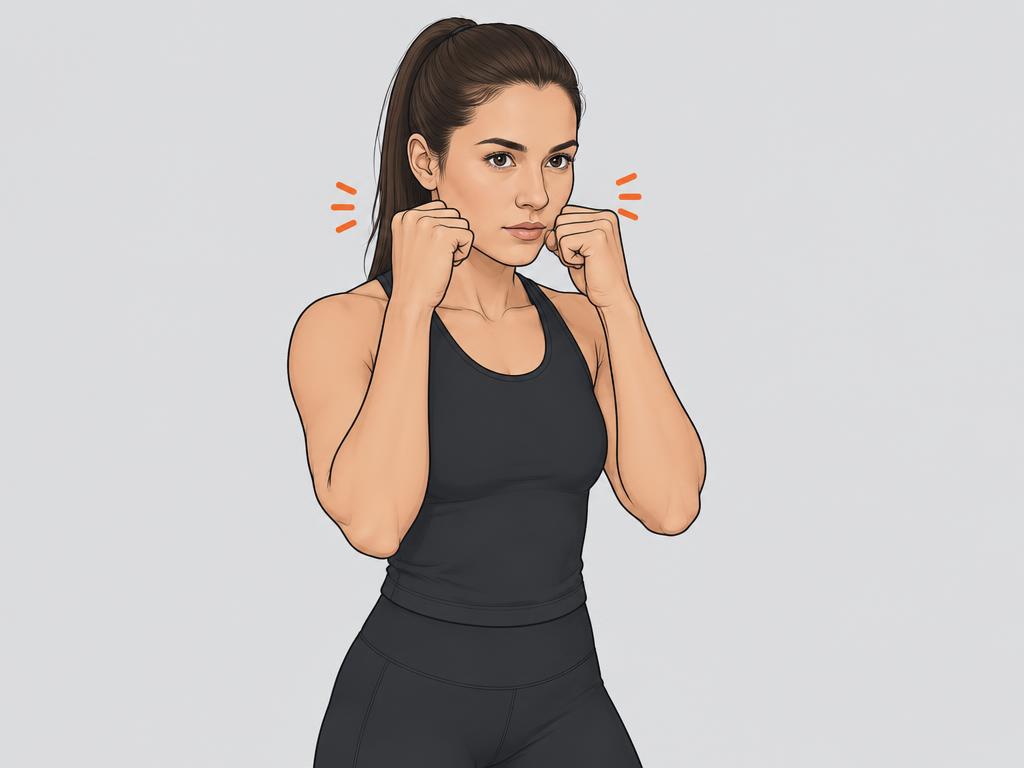
Bring both fists near cheek height, elbows lowered toward your ribs, and chin slightly down. Chest shape and shoulder mobility can affect comfort; ask a coach to help you find a guard that allows free movement without dropping your hands. [1, 2]
4. The jab (front hand)
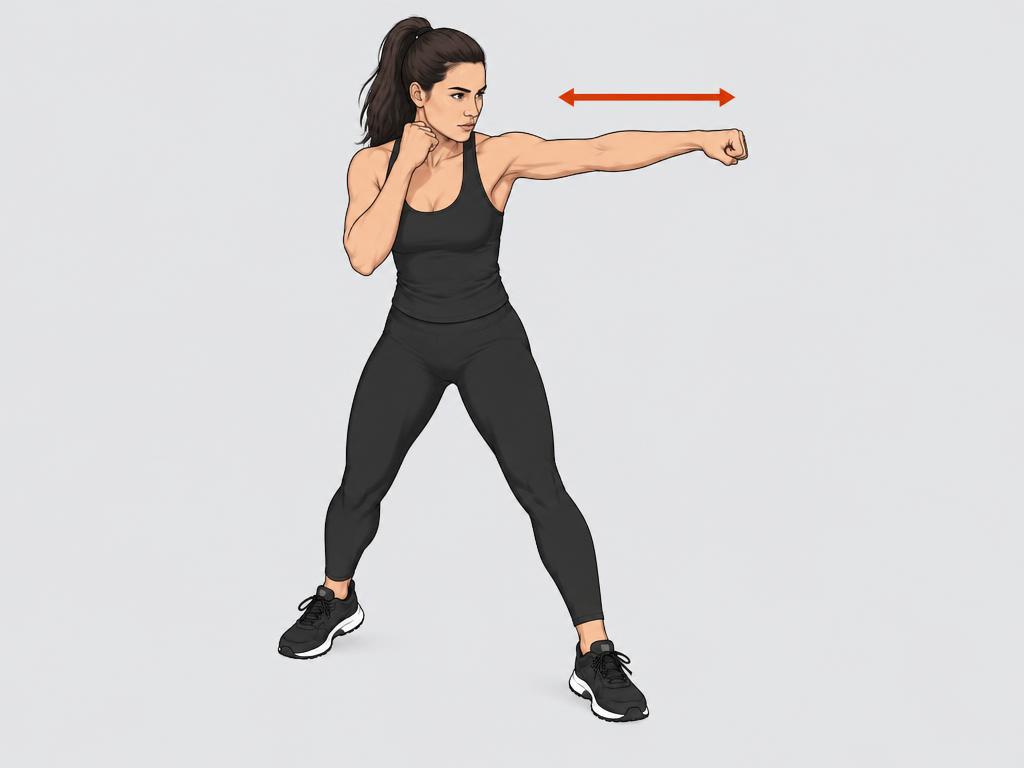
The jab is about speed and distance, not power. Use it to keep space and set up stronger strikes.
- Extend your front hand straight out from your chin.
- Rotate your fist so the palm faces down at the end.
- Keep your rear hand glued to your cheek.
- Return it to your guard smoothly without forcing the elbow to end range.
5. The cross (rear hand)
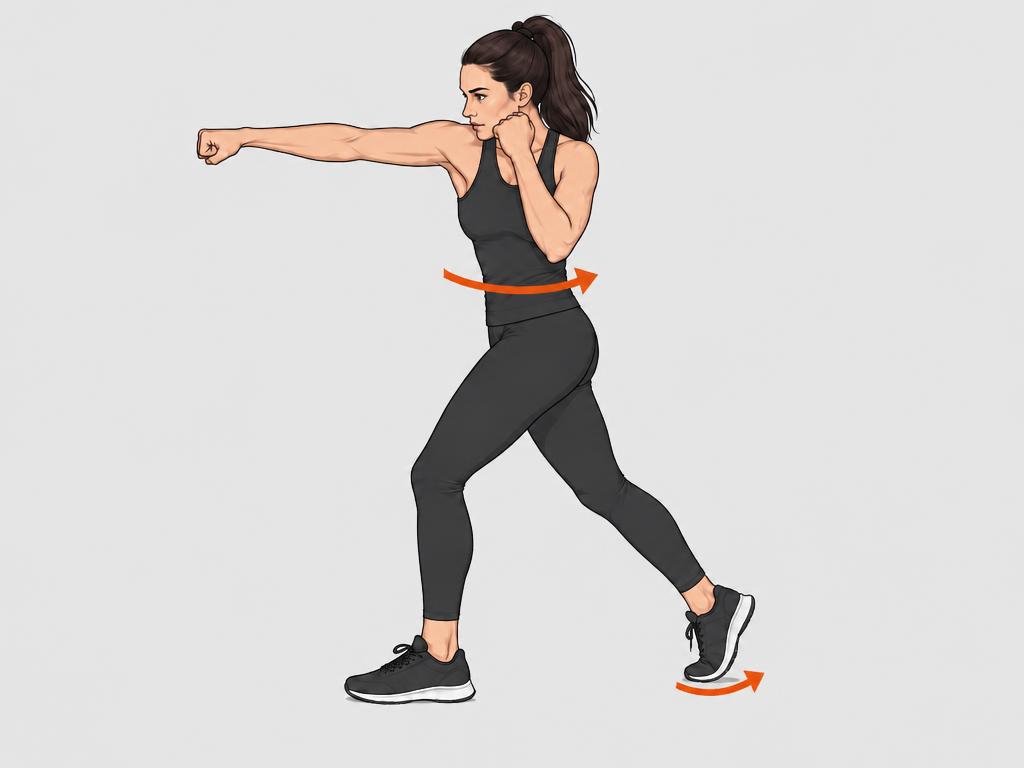
Coordinate your feet, hips, shoulders, and arm rather than trying to generate force with the arm alone. These principles apply across body types; keep the movement controlled and balanced. [1, 2]
- Push off the ball of your rear foot and pivot it like you're squashing a bug.
- Rotate your hips and shoulders toward the target.
- Let your arm extend last — it's the end of the chain, not the engine.
- Return to guard immediately.
How to punch harder
- Exhale sharply as you strike — it braces your core.
- Keep a balanced stance and practice controlled accuracy before power.
- Stay relaxed until the moment of impact, then tighten.
- Train hip rotation with shadow boxing and bodyweight squats.
Common mistakes
- Dropping the non-punching hand.
- Flaring the elbow out like a chicken wing.
- Leaning forward and losing balance.
- Bending the wrist on impact.
When a punch isn't the best choice
Any strike can injure you or another person, and no technique guarantees safety. Closed-fist impacts on hard objects can fracture the hand. A qualified self-defense instructor can teach options and their limits; prioritize opportunities to leave and get help. [3]
Frequently asked questions
Sources & further reading
Numbered references support the topics noted below, not every claim or illustration. Checked October 29, 2026.
- Boxing Canada — Instruction-Beginners Reference Material
Beginner stance, footwork, straight punches, and coaching safety.
- England Boxing — Level 2 Coaching Handbook
Coaching fundamentals, training, punchbag work, and individual adaptation.
- Cleveland Clinic — Boxer's Fracture
Hand fractures from impact, warning symptoms, and medical treatment.
Strong is a skill.
Practice self defense anywhere with Tuff.
Coming soon